
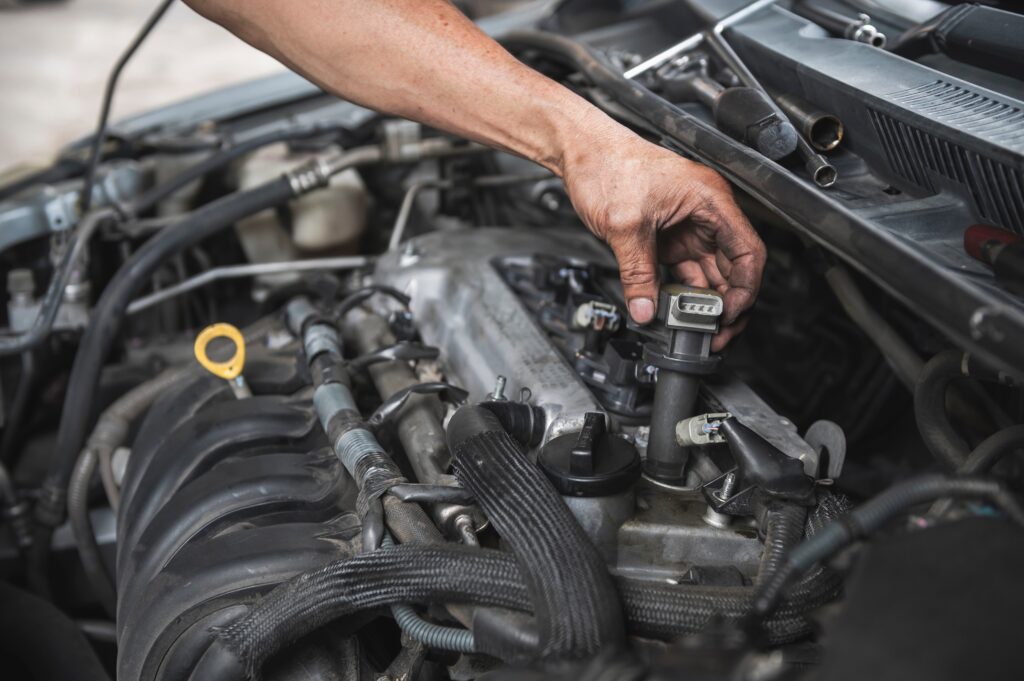
P0455 means the module ran its evaporative leak check and could not build or hold pressure, indicating a large opening in a system that is supposed to be sealed.
Key Takeaways
- The P0455 code indicates that the evaporative emission (EVAP) system failed to seal during its leak test, suggesting a large leak or a valve stuck open.
- A loose or worn gas cap is the most common trigger, though bad valves, cracked hoses, a damaged canister, and a rusted filler neck all set the same code.
- Most cars with this code drive normally, so the complaint is usually a check engine light, a fuel smell, or a failed emissions inspection.
- Each manufacturer fails the test in its own way, from clogged vent solenoids on GM trucks to capless filler problems on Ford trucks.
- A smoke test finds the leak faster than parts swapping, and the EVAP monitor must complete a drive cycle before an inspection.
What Does the P0455 Code Mean?
The P0455 code reads “Evaporative Emission System Leak Detected (Gross Leak),” and it means the powertrain control module tried to seal the fuel tank and vapor lines, pull them to a target vacuum or pressure, and monitor the reading, but the reading never reached the target.
On most systems, the module closes the canister vent valve, opens the purge valve to draw engine vacuum into the tank, and then monitors the fuel tank pressure sensor. If the pressure never moves toward the target, or bleeds off almost immediately, the module stores P0455 and turns on the light.
The word “gross” is the important part. The EVAP system must detect leaks as small as a 0.020-inch orifice, and federal OBD rules require manufacturers to demonstrate that the system detects a 0.020-inch leak. A small leak near that size sets P0456, a slightly larger one sets P0442, and a gross leak sets P0455.
The table below lays out where each code sits.
| Code | Definition | Typical leak size the monitor flags | Common finding |
| P0456 | EVAP leak detected, very small | Around 0.020 in | Hairline hose crack, weak cap seal |
| P0442 | EVAP leak detected, small | Around 0.040 in | Cracked hose, aging cap, canister seam |
| P0455 | EVAP leak detected, gross | Larger than 0.040 in, or no seal at all | Missing or loose cap, valve stuck open, disconnected line |
Drivers often type the code into a search engine as po455 code, with the letter O in place of the zero, and land on the same answer. Every generic OBD-II powertrain code starts with P0, so P0455 and po455 code refer to the same fault.
What Causes the P0455 Code?
Anything that keeps the EVAP system from sealing sets this code, which puts a long list of mostly inexpensive parts on the table. The trick is working through them in an order that finds the real leak instead of replacing a valve on a car that only needed the cap tightened.
We cover the common causes below, from the most frequent to the least.
Loose or damaged gas cap
A loose cap after refueling is the single most common cause of a P0455 engine code and the first thing to check. The cap seals the filler neck, so if it is missing, cross-threaded, or only turned partway, the tank never holds pressure. Caps also age, so even one that is fully tightened can stop sealing.
The rubber gasket hardens and cracks, the ratchet mechanism wears until the cap no longer tightens, and aftermarket caps with the wrong seal profile can leak while looking perfectly fine.
Inspect the gasket, check that the cap clicks when tightened, and confirm it is the correct part for the vehicle.
Cracked or disconnected EVAP hoses
The vapor lines between the tank, canister, purge valve, and intake run under the car and through the engine bay, where heat and road debris eventually get to them. A split hose, a line rubbed through against a bracket, or a connector that popped off during another repair all leave the system wide open.
Newer vehicles use plastic quick-connect fittings that crack if forced, and a fitting that is seated but not locked will pass a visual inspection yet still leak.
Faulty purge or vent valve
The vent valve has to close for the leak test to run. If it sticks open or if dirt keeps it from sealing, the system vents to the atmosphere throughout the test, and the module reports a gross leak with no actual hole. The purge valve fails the same test from the other direction.
A purge valve stuck open pulls the tank into a constant vacuum and confuses the pressure reading, while one stuck closed keeps the module from drawing the vacuum it needs.
Both valves are solenoids, and a scan tool can command them directly, which makes each one easy to rule in or out.
Damaged charcoal canister
The canister stores fuel vapor between drive cycles and sits low on the vehicle, usually near the tank. Road impacts crack the plastic housing, and on some designs the canister seams separate with age.
Overfilling the tank repeatedly can saturate the charcoal with liquid fuel, which damages the internal structure and can push fuel into the vent valve or lines.
A cracked canister sets P0455 on its own and often appears alongside a fuel odor at the rear of the vehicle.
Fuel tank or filler neck leak
The tank and filler neck are part of the sealed system, so a rusted filler neck, a leaking tank seam, a damaged fuel pump module seal, or a warped fuel sender gasket can set the code.
Filler neck corrosion is common in salt belt regions and often hides under the cap, where the sealing surface pits until the cap can no longer seal against it. On older trucks, the rollover valve and the tank grommet it sits in are worth a look as well.
Symptoms of a P0455 Code
Most symptoms are mild, and many owners only learn about the fault when the light comes on, or the vehicle fails an inspection.
The EVAP system does not affect engine operation under normal conditions, so drivability complaints are rare unless a purge valve is stuck open.
The symptoms below are the ones that usually bring the vehicle in.
Check engine light
The light is the primary symptom and often the only one. The module runs the EVAP leak test under specific conditions, usually a cold start with the fuel level between roughly a quarter and three-quarters of a tank, so the code may take a day or two to set after the leak appears and may not set every drive.
Fuel odor
A gross leak lets raw fuel vapor out of the system, so a gasoline smell around the vehicle after parking, near the rear wheels, or inside the cabin is a strong sign of a real leak rather than a loose cap.
This symptom warrants greater urgency than the others because fuel vapor near an ignition source poses a fire risk, and a smell inside the cabin indicates vapor is entering through the body.
Difficulty refueling
If the vent path is blocked or the canister is saturated with liquid fuel, the tank cannot displace air during a fill, causing the pump nozzle to click off repeatedly. This is more common with vent valve and canister problems than with a bad cap, and it points the diagnosis toward the rear of the vehicle.
Reduced fuel economy
The EVAP system exists to burn stored vapor in the engine instead of releasing it, so a leaking system wastes a small amount of fuel through evaporation. The loss is usually too small to notice at the pump.
A purge valve stuck open is the exception, since it leans out the idle mixture and can cause rough running along with the code, sometimes accompanied by a P0171 lean code stored alongside it.
How to Diagnose the P0455 Code
Diagnosis means finding where the system fails to seal, and the fastest route is to check the cheap and obvious causes first, then let a smoke machine show you the rest.
A scan tool with bidirectional control saves time at every step, since it can command the vent and purge valves and monitor the tank pressure in response. The steps below run in the order that finds most leaks with the least labor.
Inspect the gas cap
Remove the cap and check the gasket for cracks, flat spots, and hardening. Look at the filler neck sealing surface for rust and pitting.
Reinstall the cap until it clicks, then clear the code and drive the vehicle through enough cycles to run the monitor.
If the code stays gone, the cap was the problem. If the cap looks worn at all, replace it with the correct OEM part before moving on, since it is the cheapest component in the system.
Check EVAP hoses and lines
Trace every vapor line from the filler neck to the canister and forward to the purge valve and intake.
Look for cracks, chafing, collapsed sections, and disconnected fittings. Pay attention to areas near exhaust components and anywhere the line passes through a bracket or grommet.
Pull gently on the quick-connect fittings to confirm each is locked, not just seated.
Test the purge and vent valves
Use the scan tool to command the vent valve closed and watch fuel tank pressure. With the vent closed and the purge valve commanded open, the tank should pull into vacuum within a minute or so. If it does not, either a valve is not responding or the leak is large.
Command each valve individually and listen for a click, then check that the valve actually seals by applying vacuum to it with a hand pump. A vent valve that clicks but does not hold vacuum is a common finding on trucks that see dirt roads.
Inspect wiring and connectors
A valve that never receives its command signal typically sets a circuit code, but a corroded connector or chafed wire can cause intermittent operation that appears as P0455 alone.
Check the connectors at both valves and at the fuel tank pressure sensor for green corrosion, backed-out pins, and damaged seals.
Verify power and ground at each valve while it is commanded, and compare the pressure sensor reading to atmospheric pressure with the cap off.
Perform an EVAP smoke test
Connect a smoke machine to the EVAP service port or, if the vehicle has none, to the filler neck with an adapter. Command the vent valve to close, introduce smoke at low pressure, and observe it escape. A gross leak usually shows up within a minute.
Dim lighting helps, and a UV dye additive in the smoke makes small escape points easier to spot. The smoke test is the one step that finds leaks the other steps miss, and it confirms the repair afterward.
How to Fix the P0455 Code
The repair is whatever seals the leak the smoke test found, and the fix is usually inexpensive once the source is known.
Replace parts rather than patching them, since sealant and tape on a vapor line fail under heat cycling and put the code right back. Each repair below matches a cause from the diagnosis.
Replace or tighten the gas cap
If the cap is loose, tighten it until it clicks, then clear the code. If the gasket is worn or the ratchet no longer holds tension, replace the cap with the correct OEM part.
Aftermarket caps are a frequent source of repeat codes because the seal geometry differs by application, and a cap that fits the threads may still not seal the neck.
Repair damaged EVAP hoses
Replace cracked or chafed vapor lines with the correct part and route them clear of exhaust heat and moving components.
Replace broken quick connect fittings rather than forcing them back together. If a line was disconnected during a previous repair, reconnect it and confirm the fitting locks. Smoke test the system again afterward to make sure nothing else was missed.
Replace faulty EVAP valves
Replace a vent valve that will not hold vacuum, and a purge valve that leaks or fails to respond to command.
On vehicles where the vent valve is exposed near the canister, install the updated part with a filter or shield if the manufacturer offers one, as dirt intrusion is the most common cause of failure. Clear the codes and confirm the valves respond correctly on the scan tool before releasing the vehicle.
Repair wiring or connectors
Repair chafed wiring with a proper splice and heat-shrink tubing, and replace connectors that show corrosion or have damaged terminals.
Route the repaired harness away from exhaust and sharp edges. Confirm the valve operates when commanded and that the fuel tank pressure sensor reads correctly across its range.
Repair EVAP system leaks
Replace a cracked charcoal canister, a rusted filler neck, or a leaking fuel pump module seal as needed. A saturated canister that has been pushing fuel into the vent valve often takes the valve with it, so replace both together.
After any repair, smoke test the system once more, clear the code, and run the EVAP monitor to completion.
P0455 Toyota: Causes, Diagnosis & Repair
A P0455 Toyota diagnosis usually ends at the rear of the vehicle, where the canister and the leak detection pump share one assembly.
Toyota conducts its leak check with the engine off, so the failure points differ from those of most other brands. The Camry, Corolla, RAV4, and Tacoma generate most of the reports.
Common causes on Toyota
A loose cap still tops the list, and Toyota caps are sensitive to the tether getting caught under the seal on installation.
Beyond the cap, the usual findings are a failed canister pump module, a clogged fresh-air filter on the canister, and a cracked canister housing caused by road debris. Vehicles that live on gravel or dirt roads clog the filter first, which sets the code along with refueling complaints.
How to diagnose it
Check the cap and filler neck, then run the scan tool’s EVAP leak check so the pump module tests the system on command.
If the module cannot pull vacuum, smoke test from the service port and inspect the canister assembly and filter. Check for a calibration update on the model before condemning parts, since Toyota has revised monitor logic on several engines.
How to repair it
Replace a worn cap with the OEM part and clear the canister filter if it is packed.
Replace the pump module only after a smoke test or scan tool leak check confirms it, because the part is expensive and a clogged filter produces the same result.
Rerun the leak check afterward to confirm the monitor passes.
P0455 Chevy: Causes, Diagnosis & Repair
A P0455 Chevy complaint on a truck or SUV points more often to the canister vent solenoid than to any other part. GM mounts it near the canister on the rear of the frame, where mud and dust reach it. The Silverado, Tahoe, Equinox, and Trailblazer account for most cases, with the Cruze and Malibu behind them.
Common causes on Chevy
Road grime packs the vent solenoid until it no longer seals, which is the number one finding on trucks that see dirt roads. Purge solenoids on the Cruze, Malibu, and Equinox stick open due to carbon buildup, setting the code and causing a lean idle. Worn caps and rusted filler necks on higher-mileage trucks round out the list, along with cracked canisters and split vapor lines along the frame.
How to diagnose it
Command the vent solenoid closed on the scan tool and watch fuel tank pressure. If it never moves, pull the solenoid and test it with a hand vacuum pump. Smoke test the tank area before replacing anything, since a cracked canister and a packed vent solenoid look identical on the scan tool.
How to repair it
Replace the packed vent solenoid with the updated part and filter to prevent it from clogging again.
Replace a sticking purge solenoid rather than cleaning it, since the carbon builds up again.
Address filler neck rust before buying a new cap, because no cap seals against a pitted neck.
P0455 Ford: Causes, Diagnosis & Repair
A P0455 Ford diagnosis starts at the filler neck on any vehicle with the capless Easy Fuel system. The F-150, Escape, Focus, and Explorer use a spring-loaded flapper door in place of a cap, and it is the first place to look. Vent solenoids and purge valves follow close behind.
Common causes on Ford
Debris caught in the flapper door or a worn door seal leaves the system open. The canister vent solenoid on Ford trucks sits exposed and clogs with dirt, just like on GM trucks.
Purge valves on EcoBoost engines often stick open enough to warrant routine checks, and fuel tank pressure sensors on the F-150 fail intermittently, setting the code without a physical leak.
How to diagnose it
Inspect and clean the flapper door, then use the funnel adapter supplied with the vehicle to connect a smoke machine at the filler.
Command the vent and purge valves on the scan tool and watch tank pressure respond.
Compare the pressure sensor reading against atmosphere before trusting it. A misfire code, such as P0352, stored alongside is a separate ignition fault and not the cause of the EVAP result.
How to repair it
Replace a damaged flapper assembly rather than trying to reseal it.
Replace a clogged vent solenoid or a sticking purge valve with the current part number.
If the pressure sensor reads wrong, replace it and confirm the reading before running the monitor again.
P0455 Hyundai: Causes, Diagnosis & Repair
A P0455 Hyundai repair on the Elantra, Sonata, Santa Fe, or Tucson often involves the canister close valve, Hyundai’s term for the vent valve. Kia vehicles on the same platforms share the same failures. Software has played a part on several engines as well.
Common causes on Hyundai
The canister close valve sticks open with age and contamination, and it sits behind the rear wheel where it takes road splash. The purge control solenoid valve is another frequent failure point that can stick open, triggering the code and causing a rough idle after refueling. Caps with worn ratchets that stop clicking and corroded filler neck flanges are common on older examples.
How to diagnose it
Command the close valve on the scan tool and check that it holds vacuum with a hand pump. Test the purge solenoid the same way and watch for a vacuum leak at idle. Check for technical service bulletins for the previous model year before ordering parts, as Hyundai has issued monitor logic updates for this code.
How to repair it
Replace a valve that will not hold vacuum, and replace a leaking purge solenoid if both fail the test. Fit an OEM cap if the ratchet is worn. Apply any applicable software update, then clear the code and run the monitor.
When to Get Professional Help?
Seek professional diagnosis when the code returns after a new cap, when there is a fuel smell you cannot locate, or when the vehicle is due for an emissions inspection. A recurring code means the leak is somewhere the cap does not control, and finding it without a smoke machine and a bidirectional scan tool turns into guesswork with parts.
A fuel smell inside the cabin or a visible fuel leak needs attention the same day, not a spot on next week’s schedule. Emissions deadlines add pressure because the EVAP monitor must run to completion after the repair, which can take several drive cycles under the right fuel-level and temperature conditions.
A shop can confirm the repair and verify monitor readiness before the test. Note that P0455 is a gasoline EVAP code. Diesel vehicles run different aftertreatment monitors and set codes such as P20EE for catalyst efficiency instead.
Resolve P0455 Faster With Identifix Direct-Hit
An EVAP gross leak is a simple concept with a long list of possible locations, and the right place to look varies by vehicle. The same P0455 code means a packed vent solenoid on one truck, a capless filler flapper on the next, and a canister pump module on the one after that. Guessing wrong costs the labor of dropping a tank or replacing a canister the vehicle did not need.
Identifix Direct-Hit puts confirmed fixes, OE service manuals, and interactive wiring diagrams behind a search filtered by year, make, and model, so the technician sees the EVAP fault that actually resolved this code on this vehicle.
Contact us to see how Direct-Hit handles a P0455 diagnosis on the vehicles your shop sees most.
FAQs
Can I keep driving with the P0455 code?
Usually yes, at least for a short time, because a P0455 engine code does not affect how the engine runs on most vehicles, and a loose cap causes no damage. That puts it in a different category from a knock sensor fault such as P0332, where continuing to drive risks the engine itself.
The exceptions are a strong fuel smell, which means vapor is escaping near hot components, and a visible fuel leak, both of which need immediate attention. The code will fail an OBD-II emissions inspection anywhere one is required, so plan the repair before the test is due.
How much does it cost to fix a P0455 code?
The cost ranges from the price of a gas cap to several hundred dollars, depending on the cause. A cap typically runs under 40 dollars; a vent or purge valve is a modest part plus an hour or less of labor; and a charcoal canister, canister pump module, or filler neck can run several hundred dollars installed, more if the tank has to come down. Expect roughly an hour of diagnostic time for a smoke test.
On newer vehicles, check the EPA emissions warranty before paying out of pocket, since emission-related parts are covered for 2 years or 24,000 miles against defects, and the OBD computer is covered for 8 years or 80,000 miles.
How can I diagnose P0455 without replacing parts?
Start with the cap and the filler neck, then use a scan tool to command the vent valve closed and watch fuel tank pressure. If pressure will not move, the leak is large, or a valve is not sealing.
A smoke test identifies the issue without replacing any parts. Commanding each valve and testing it with a hand vacuum pump tells you whether the valve is bad before you buy one.
Why does P0455 keep coming back after replacing the gas cap?
Because the cap was not the leak, or the new cap does not seal. Aftermarket caps with the wrong seal profile are a common repeat cause, as is a rusted filler neck that no cap can seal against.
If the code returns with a correct OEM cap on a clean neck, the leak is elsewhere, since a stuck vent valve, a cracked canister, and a split line all set the same code and the module cannot tell them apart. Compare this to a P0442 small leak code, where a marginal cap is a more likely repeat offender.
Can P0455 cause a car to fail an emissions test?
Yes, because any active check engine light fails an OBD-II inspection, whether the code is an EVAP leak or a catalyst fault such as P0420. Clearing the code before the test does not help because it resets the EVAP monitor to not ready, and an incomplete monitor also fails the test. The repair has to be done, and the monitor has to complete a full drive cycle first.
Can P0455 clear itself after the problem is fixed?
Yes, though it happens on the module’s schedule rather than yours. If the cap was loose and gets tightened, federal OBD regulations allow the module to turn the light off after three consecutive drive cycles in which the EVAP test passes, and it erases the stored code after roughly 40 warm-up cycles without a repeat.
Clearing it with a scan tool is faster, but the monitor still has to run and pass before the vehicle is inspection-ready. A code that reappears after the light goes out means the leak is intermittent, which is typical of a cracked line that opens with temperature or a valve that sticks only some of the time.
Identifix is the leading provider of automotive repair shop solutions and sevices designed to improve shop profitability and repair outcomes.