
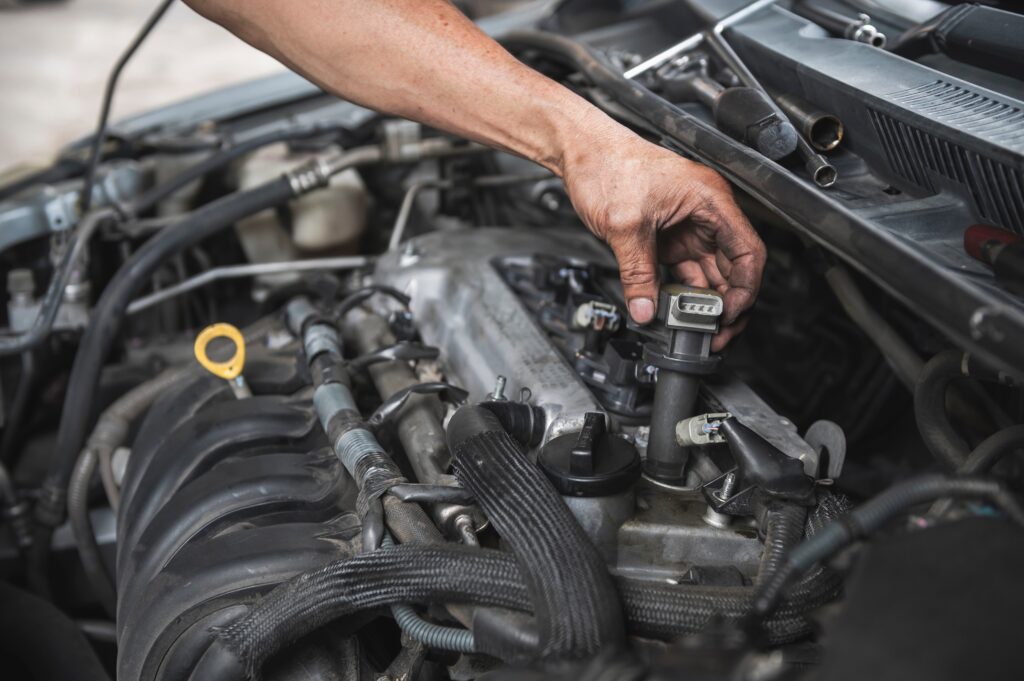
P0700 means the transmission control system has reported a fault and asked for the warning light, and the code naming the actual problem is stored one level deeper.
Key Takeaways
- The P0700 code means the transmission control module detected a fault and asked the engine computer to turn on the check engine light.
- Common symptoms include warning lights, harsh or delayed shifts, slipping, shuddering, and a transmission stuck in one gear.
- The only diagnostic step P0700 itself calls for is reading the transmission module’s own fault code, which names the real problem and directs the repair.
What Does the P0700 Code Mean?
The direct answer to what does code P0700 mean is that the transmission control module (TCM) found a fault in its own system and asked the engine computer to turn on the check engine light.
The engine computer controls the warning lamp, so a transmission fault that can affect emissions reaches the driver through this handoff, which federal OBD rules require.
Drivers searching what is code P0700 often expect it to name a broken part, and it never does, because the code naming the real problem sits in the TCM as a sub-code.
Reading the transmission module’s own codes is the one diagnostic step P0700 itself calls for, and the table below condenses the rest.
| P0700 at a glance | Details |
| Definition | Transmission control system malfunction (MIL request), meaning the TCM asked for the warning light. |
| What it tells you | An emissions-relevant fault code is stored in the transmission computer. |
| Only direct diagnostic | Read the TCM’s own fault codes with a transmission-capable scan tool. |
| What directs the repair | The sub-code retrieved from the TCM, never P0700 by itself. |
| Can you drive? | Gently and briefly with normal shifting, and not at all once it slips, shudders, or smells hot. |
P0700 Code Symptoms
The symptoms belong to whatever fault the TCM stored, so they range from a silent warning light to a vehicle that barely moves. The table below matches the common complaints to what each one usually means.
| Symptom | What it usually means |
| Check engine light with a transmission warning | The guaranteed sign, since requesting the lamp is what this code does. |
| Harsh or delayed shifts | The module can no longer control pressure and timing accurately, or protects the clutches on purpose. |
| Stuck in one gear (limp mode) | The module stopped trusting its own control and locked a gear so the vehicle can reach a shop. |
| Slipping or shuddering | RPM climbs without acceleration, and converter shudder feels enough like a misfire that drivers expect a P0300. |
| Worse fuel economy and odd behavior | Late shifts, an unlocked converter clutch, and wandering shift points burn extra fuel. |
Why P0700 Requires Further Diagnosis
The question what does code P0700 mean always has a two-part answer, and a generic code reader shows only the first part.
Basic OBD-II tools read the engine computer, where P0700 lives, while the sub-code naming the real fault sits in the TCM, which many inexpensive readers cannot access.
Testing solenoids, wiring, or fluid before that sub-code is in hand wastes time on parts that were never suspects. A TCM-capable scan tool turns one vague code into a specific fault, and a TCM that will not answer such a tool has moved itself and its power and ground supply to the top of the list.
Common Causes of P0700
P0700 itself has one cause, which is a fault code stored in the TCM, so the list below describes where those sub-codes usually point rather than what P0700 proves. Electrical and hydraulic control problems lead it, with expensive internal damage at the bottom.
The TCM and its power supply, fluid that is low or degraded, shift solenoids and the valve body, and the wiring between module and case cover most cases.
Failed sensors distort the module’s picture of the transmission, while ratio sub-codes with debris in the pan are what genuine internal damage looks like.
Transmission Components That Can Trigger P0700
Any component the TCM monitors can put a sub-code behind this master code, and knowing what each one does makes the sub-code list far less intimidating.
The table below summarizes the components that trigger P0700 most often and how each failure typically shows itself.
| Component | How its failure shows up |
| Shift solenoids | Wrong-gear starts, skipped shifts, and a solenoid-specific sub-code. |
| Input and output speed sensors | Erratic or missing speed readings, harsh shifts, ratio codes. |
| Transmission range sensor | Wrong gear display, starting problems, wandering shift behavior. |
| Fluid temperature and pressure sensors | Implausible readings that push the module into protective shifting. |
| Valve body | Sticking valves that mimic solenoid faults across several gears. |
| Torque converter clutch | Shudder under light throttle and lockup or slip sub-codes. |
| Transmission control module | Communication loss, nonsense data, and clusters of unrelated codes. |
How to Diagnose P0700
Diagnosing P0700 means retrieving the sub-code, and everything after that serves the sub-code rather than the master code. The steps below run in that order, and nothing gets tested until the fault code from the TCM says it is a suspect.
Scan the PCM & TCM for additional codes
Read both modules and record every code with its freeze frame data, because the TCM sub-code is the entire diagnosis of P0700 itself.
Engine faults matter too, since the TCM shifts on engine data and a lean code like P0171 deserves early attention, while a TCM that will not communicate points at its power, grounds, and network wiring.
Check transmission fluid level & condition
Check the level by the procedure the vehicle requires, which on many modern transmissions means a specific temperature rather than a dipstick. Bright red fluid is healthy, brown and burnt fluid is not, and glitter on the magnet points internal.
Inspect transmission wiring, connectors & grounds
Inspect the harness from the TCM to the case connector for chafe, heat damage, and fluid inside the connector, and restore the grounds to clean metal. Wiggle testing while watching live data catches the intermittent faults that never appear in the bay.
Test solenoids, sensors & TCM power supply
Command each solenoid the sub-code implicates and verify resistance against specification, then compare input and output speed sensors against road speed. A ratio mismatch between healthy sensors means the slip is real, and the TCM needs proper voltage both running and cranking.
Perform transmission pressure & mechanical tests
Reserve pressure testing and the pan inspection for cases the electrical steps did not resolve. Line pressure reveals pump and valve body problems, converter slip separates clutch trouble from converter trouble, and debris in the pan moves the conversation to rebuild with evidence in hand.
Perform transmission pressure & mechanical tests
Reserve pressure testing and mechanical inspection for cases the electrical steps did not resolve. Line pressure tests reveal pump wear and valve body leaks, converter slip readings separate clutch problems from converter problems, and a pan inspection puts the internal condition in plain view.
How to Fix the P0700 Code
Anyone researching how to fix P0700 code problems should hold off on quotes until the sub-code has spoken, because the repairs run from an afternoon of wiring work to a full rebuild.
Match the fix to the fault the TCM named, clear both modules afterward, and verify shift quality on a road test.
| Confirmed fault | Repair |
| Wiring, grounds, or connectors | Sealed splices, new seals where fluid wicked in, and grounds restored to bare metal. |
| Degraded or low fluid | A fluid and filter service in the exact specification, with a drain and fill preferred on neglected units. |
| Failed solenoid or sensor | Replace the ones the sub-code and tests condemned, usually accessible with the pan off. |
| Valve body or TCM | Overhaul or replace, check for a software update first, and program the new module to the vehicle. |
| Internal damage | Repair, rebuild, or replace on evidence, and flush the cooler so debris cannot ruin the fresh build. |
A reflash remains the cheapest transmission repair that exists, which is why the calibration check comes before parts. Bargain solenoids in a hydraulic control system are a false economy that usually buys the same code twice.
Can You Drive With a P0700 Code?
Short trips at gentle speeds are usually possible, and the sub-code decides whether they are wise.
A P0700 engine code with normal shifting can wait a few days for an appointment, while slipping, shuddering, or limp mode calls for parking the vehicle, because slip converts fuel into heat and heat destroys fluid and clutches.
Limp mode exists to reach a shop rather than to finish the week’s commuting. Avoid towing, heavy loads, and highway distances until the fault is known, and treat any burning smell as the point where driving stops.
P0700 Code Repair Cost
The repair cost behind a P0700 spans from nearly free to the price of a transmission, which is one of the widest spreads any engine code produces, and the sub-code decides where a given vehicle lands.
For anyone weighing how to fix P0700 code costs before authorizing diagnosis, the table below lists typical parts pricing for the common repairs, with labor varying by transmission access.
| Repair | Typical parts cost |
| Wiring, ground, or connector repair | 20 to 100 dollars in materials. |
| Fluid and filter service | 100 to 300 dollars including fluid. |
| Shift solenoid | 30 to 150 dollars per solenoid. |
| Speed sensor or pressure switch | 25 to 120 dollars. |
| Valve body | 200 to 600 dollars. |
| TCM replacement with programming | 300 to 900 dollars. |
| Rebuild or replacement | 2,500 to 5,000 dollars or more installed. |
Note: Prices are aggregated estimates drawn from multiple retail parts and repair pricing sources, and actual costs vary by brand, OEM versus aftermarket parts choice, and region.
Expect an hour or more of diagnostic time, since reading both modules and road testing belong in any honest workup. Check the vehicle’s powertrain warranty before authorizing major work, because transmissions often have some of the longest factory coverage, and several manufacturers extend coverage on known problem units.
Manufacturer-Specific Causes & Solutions for P0700
The master-code logic is identical everywhere, but the sub-codes behind it follow strong patterns by brand and transmission family. The blocks below give the usual finding and the first move for the five brands behind most of the searches.
P0700 on Chevrolet
A P0700 Chevy case on the Silverado, Tahoe, or Suburban points first at the six-speed’s control unit, since the 6L80 family carries its solenoids and TCM inside the pan as one module with a known failure history. The eight-speeds add a torque converter shudder that GM addressed with a revised fluid, so an exchange is the first move on a shuddering 8L90.
P0700 on Honda
A P0700 Honda complaint concentrates on the V6 five-speeds of the 2000s, which built a reputation for internal wear, pressure switch faults, and converter problems. The nine-speed in newer Odysseys and Pilots shifts the pattern toward software, with repeated updates for shift quality and false codes.
P0700 on GMC
A P0700 GMC case shares the Chevy truck patterns on the Sierra and Yukon, while the Acadia adds a broken wave plate in the 3-5-reverse clutch of its older six-speeds. Lost reverse with slipping third and fifth gears, and ratio codes behind the master code, is the signature of that failure.
P0700 on Ford
Ford’s cases cluster around two transmissions with documented histories. The six-speed in F-150s and Mustangs carries its speed sensors in a molded lead frame that cracks and mimics major failure at a far lower repair cost, while the dry-clutch automatic in Focus and Fiesta models generated years of TCM failures with extended coverage on many examples.
P0700 on Toyota
Toyota’s automatics set this code less often than the other brands here, and the cases that appear lean on fluid and maintenance. So-called lifetime fluid ages like any other, and high-mileage Camrys, RAV4s, and Highlanders respond to a proper service and the current calibration.
How to Prevent P0700 From Returning
Prevention runs through fluid care first and electrical care close behind.
- Service the transmission fluid on a real schedule regardless of lifetime-fill marketing.
- Use the exact specification the transmission calls for.
- Check the level whenever a leak leaves its mark on the driveway because low fluid does damage silently.
The electrical side rewards a few small habits just as well. Keep battery terminals and grounds clean, since control modules misbehave on marginal voltage before anything mechanical complains, and have the shop glance at TCM data during regular services so a drifting sensor gets caught before the light.
Engine health feeds into the same system, and on the many vehicles that warm transmission fluid through the engine’s cooling system, a cooling fault, including a thermostat problem that sets a P0128, keeps the fluid outside its intended temperature range and deserves prompt repair.
Resolve P0700 Faster With Identifix Direct-Hit
A master code hands the technician a locked box, and the productive question is what this year, make, and model usually keeps inside it.
The same P0700 means a control module on one truck, a wave plate on the crossover beside it, and a software calibration on the minivan after that, and the difference between those answers is the difference between an afternoon and a transmission bill.
Identifix Direct-Hit puts confirmed fixes, OE service manuals, and interactive wiring diagrams behind a search filtered by year, make, and model, so technicians can see which repair actually cleared this code on this vehicle.
Contact us to see how Direct-Hit handles a P0700 diagnosis on the vehicles your shop sees most.
Frequently Asked Questions
Can P0700 prevent a vehicle from starting?
Usually no, because starting belongs to the engine side and P0700 reports a transmission fault. The exception runs through the transmission range sensor, which doubles as the neutral safety function on many vehicles, so a range sensor fault behind the master code can leave the starter silent in park while the vehicle starts in neutral.
A no-start with P0700 stored is a reason to check the range sensor sub-codes rather than a sign of a dead transmission.
Can disconnecting the battery temporarily clear P0700?
Yes, temporarily, and the trade-off is worse than it looks. The code returns as soon as the module sees the fault again, and under federal OBD regulations, the light only stays off after three consecutive clean drive cycles, so the disconnect gains nothing at inspection time.
It also erases the transmission’s adaptive learning, which means shift quality often worsens during the relearn period while the underlying fault remains.
Can an overdue transmission fluid change trigger P0700?
Yes, and fluid neglect is one of the most common stories behind this code. Degraded fluid varnishes valves, clogs solenoid screens, and lets clutches slip, any of which sets a sub-code that P0700 then announces.
A service with the correct fluid can resolve early cases, though a transmission that has slipped on burnt fluid for months may have turned the maintenance item into a mechanical one.
Can P0700 appear after a transmission replacement?
Yes, and the usual causes have little to do with the replacement unit’s health. A swapped transmission needs its control module programmed and its adaptive values relearned; disturbed connectors invite intermittent faults, and a used transmission can arrive carrying its own sub-codes.
Fluid level errors after a swap round out the list, so a post-replacement P0700 calls for sub-codes, fluid, and connectors before any warranty argument.
Does P0700 automatically mean the transmission needs to be replaced?
No, and assuming so is the most expensive mistake this code invites. The plain answer to what is code P0700 is a messenger, one that reports a fault somewhere in transmission control without naming it, unlike a code such as P0420 that points at the catalytic converter specifically.

Identifix is the leading provider of automotive repair shop solutions and sevices designed to improve shop profitability and repair outcomes.