
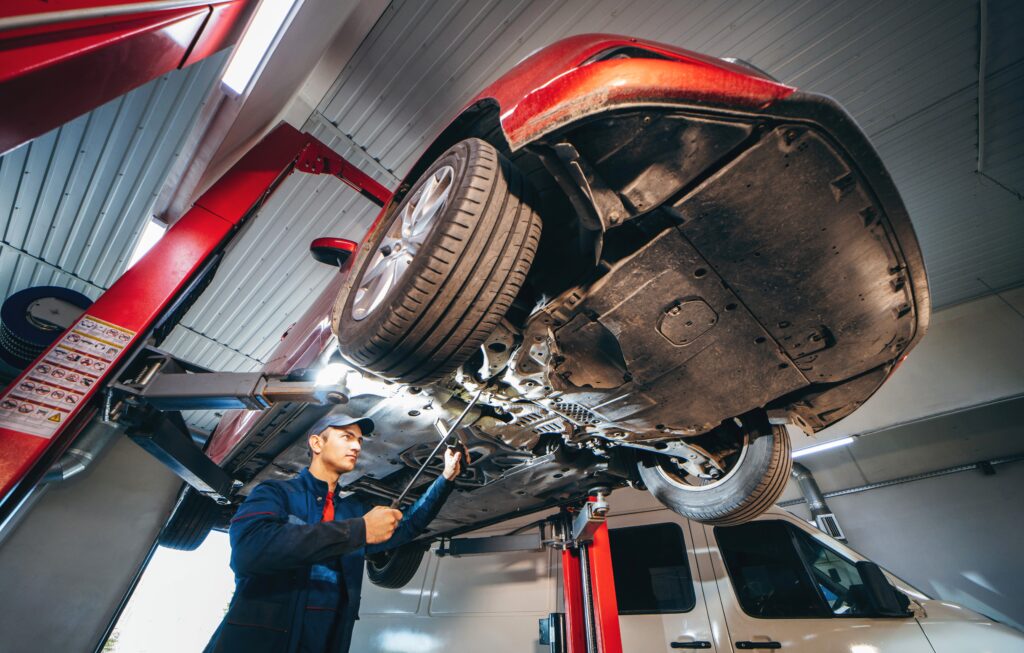
P0446 means the EVAP vent system failed its performance test: the control module commanded the canister vent valve, and the system pressure didn’t respond as expected.
Key Takeaways
- P0446 affects evaporative emissions only, leaving engine performance, safety, and fuel economy largely unaffected.
- A bi-directional scan tool isolates the circuit and commands the valve faster than replacing parts on suspicion.
- To confirm the necessary repair, clear the code and complete an EVAP drive cycle until the monitor reports ready.
What Does the P0446 Code Mean? Everything You Need to Know for a Quick Diagnosis
The generic SAE J2012 description for P0446 is Evaporative Emission System Vent Control Circuit, but the code is not an electrical fault. GM describes it as DTC P0446 Evaporative Emission (EVAP) Vent System Performance.
During the EVAP self-test, the control module closes the vent valve to seal the system, pulls a light vacuum through the engine intake, then opens the vent and watches the pressure response. P0446 sets when the pressure doesn’t behave as expected, meaning the vent valve or vent path isn’t managing vapor correctly.
Electrical faults in the vent solenoid circuit set their own codes: P0449 for the vent valve or solenoid circuit and, on GM vehicles, P0498 and P0499 for control circuit low and high. GM’s P0446 test only runs when none of those circuit codes are set.
The table below summarizes the problem and its solution for quick diagnosis.
| P0446 at a glance | Details |
| Definition | Evaporative Emission (EVAP) Vent System Performance |
| What it means | The vent valve didn’t open or close correctly as commanded by the powertrain control module (PCM). |
| Most common cause | A failed vent valve, often from moisture, rust, or debris near the canister. |
| First check | Command the vent valve with a scan tool and listen for a click, then check the fuse and connector. |
| Quick fix | Replace the vent valve and clear the vent line, then confirm the EVAP monitor passes. |
| Can you drive? | Yes, but the tank may be hard to fill, and the vehicle will fail an emissions inspection until you fix it. |
P0446 Code Symptoms
The main symptoms are a check engine light, a gas pump that clicks off during refueling, and sometimes a fuel smell near the rear. The vent valve controls only the canister’s fresh-air side, so the fault rarely affects engine performance or fuel economy.
A pump that keeps clicking off is the clearest sign, because it means the vent is stuck closed, and the air in the tank has nowhere to go.
The following table matches each symptom to what it means, in the order owners usually notice them.
| Symptom | What it usually means |
| Check engine light or failed emissions test | The earliest sign. An active code fails an OBD-based inspection, and clearing it beforehand can leave the EVAP monitor “not ready.” |
| Gas pump clicking off during refueling | A stuck-closed or blocked vent causes displaced tank air to back up the filler neck and trip the nozzle shutoff. |
| Fuel smell near the tank or rear wheel | A loose line or saturated canister releases vapor, since the vent sits on the canister’s clean-air side. |
| Related EVAP codes stored alongside it | P0440, P0442, or P0455 suggest a leak or a wider EVAP fault, while P0449, P0498, or P0499 point to an electrical fault in the same vent solenoid circuit. |
| Rough idle after fill-ups | The vent doesn’t cause this. If the purge valve is stuck open at the same time, it can pull vapor into the intake. |
Common Causes of P0446
The most common causes of a P0446 code are a faulty vent valve solenoid, damaged wiring, or a clogged vent hose. The code monitors the vent system’s pressure response, not the solenoid’s electrical circuit or the size of a leak. Check the valve and the vent path before looking for leaks.
The table below matches each cause to how it sets P0446.
| Potential cause | How it sets P0446 |
| Faulty canister vent valve | Moisture or road dirt jams the plunger, or the coil burns out, so the valve doesn’t respond when the PCM commands it. |
| Blocked vent hose or vent filter | Mud, dirt, or insect nests choke the line, so tank vacuum won’t bleed off when the PCM commands the vent open. |
| Damaged wiring, corroded connectors, or blown fuse | An open or shorted circuit normally sets P0449, P0498, or P0499 instead of or alongside P0446, so check those codes and the fuse before buying a valve. |
| Saturated or broken charcoal canister | Loose carbon pellets can travel into the vent path, blocking airflow or jamming the valve. |
| Faulty fuel tank pressure sensor | Incorrect voltage readings make a working vent look like it failed the pressure test. |
| Purge valve stuck open | Extra intake vacuum during the test skews the pressure readings, though this fault more often sets P0496 on its own. |
| Failed powertrain control module | A rare internal fault misreads a good circuit, so it belongs at the bottom of the list. |
How to Diagnose P0446
Diagnosing code P0446 requires testing the vent valve solenoid, verifying power and ground at the connector, and checking the vent lines for blockages. Start with a bi-directional scan tool to save time. This tool isolates the circuit before you crawl under the vehicle.
1. Scan for P0446 & related EVAP trouble codes
Plug in a scan tool to confirm P0446 and check for other failure codes, such as P0440 or P0455. Note the freeze frame data to see the exact engine temperature, fuel level, and operating conditions when the computer set the light.
2. Check the gas cap & inspect EVAP hoses
Inspect the gas cap seal for cracks or debris before checking the wiring. Trace the EVAP hoses around the canister and tank. Look for loose fittings, split rubber, or pinched lines that block pressure flow.
3. Inspect the vent valve wiring, connector & fuse
Locate the vent valve harness near the charcoal canister and check for visible damage. Inspect the plug pins for green corrosion, loose terminals, or frayed wires. Check the power supply fuse to ensure battery voltage reaches the circuit.
4. Test the vent valve solenoid & command it with a scan tool
With the key on and engine off, cycle the vent valve using a bi-directional scan tool. Listen for a clear click under the rear bumper, and check internal coil resistance with a multimeter. An infinite reading or zero click means the solenoid failed.
5. Perform a smoke test & confirm the fault
Hook a smoke machine up to the EVAP service port to check for leaks or blockages. Smoke escaping from the canister seams or vent line indicates a bad housing or cracked hose. If no smoke exits an open vent, the breather filter is clogged.
P0446 Vent Valve Location
The canister vent valve sits under the rear of the vehicle, mounted on or right next to the EVAP charcoal canister. Check near the fuel tank or behind the rear bumper first, since most manufacturers place the canister there.
Vent valve location on Chevy Silverado
On a Chevy Silverado, the vent valve mounts on the frame near the charcoal canister, close to the spare tire and fuel tank. Look under the bed near the rear axle; the valve sits on or beside the canister and has a two-pin connector attached.
Vent valve location on Toyota Camry
On a Toyota Camry, the vent valve sits under the rear of the vehicle near the fuel tank, attached to the charcoal canister assembly. Remove the plastic splash guard under the body to access it; you’ll see the wiring plug and rubber breather hose.
Manufacturer-Specific Causes & Solutions for P0446
P0446 means the same thing on every vehicle, but the part behind it varies by brand. These blocks cover common findings and the first step for the five most-searched brands.
P0446 on Chevrolet
A P0446 Chevy case on the Silverado, Tahoe, or Suburban usually comes down to a failed vent valve or corroded harness pins under the rear of the vehicle.
GM bulletin 15-06-04-002 for 2011 to 2015 Silverado and Sierra trucks traces the code to dirt and water entering the canister vent solenoid’s fresh-air intake, and the fix is a revised sealed valve vented through a remote pre-filter on top of the fuel filler housing.
For 2019 to 2024 trucks, bulletin 23-NA-073 adds an in-line filter between the canister and the air inlet for vehicles used in extremely dusty conditions, as a customer-pay repair. Inspect the two-pin connector for green corrosion before buying parts, since most P0446 Chevy repairs end at the valve, its wiring, or the vent filter.
P0446 on GMC
A P0446 GMC case on the Sierra or Yukon follows the same pattern as Chevrolet, because both share the same EVAP layout. Check whether the revised valve and remote pre-filter from bulletin 15-06-04-002, or the in-line filter from 23-NA-073, have already been fitted before replacing the valve.
A new valve fitted with the original vent routing can fill with dirt again, so most P0446 GMC repairs should include the new valve and the filter GM specifies for that model year. GM also calls the 23-NA-073 filter a maintenance item to check periodically.
P0446 on Toyota
A P0446 Toyota case on older Camry, Corolla, and Tacoma models usually points to the vent valve or canister closed valve mounted on the charcoal canister. Many newer Toyotas build the vent valve into a canister pump module and set P2419 or P2420 instead, so confirm the system design before ordering parts.
On integrated designs, a P0446 Toyota repair often means replacing the canister assembly, since Toyota’s repair manual states the canister pump module cannot be disassembled.
P0446 on Ford
A P0446 diagnosis on a Ford F-150, Explorer, or Escape starts with the canister vent solenoid near the fuel tank and the vent filter beside it. First, check the solenoid’s power feed and fuse, then look for mud or insect nests in the vent filter. Check the solenoid and its filter before the wiring, and confirm the procedure in Ford’s workshop manual for the exact model.
P0446 on BMW
A P0446 BMW complaint usually involves the leak diagnosis pump (DMTL), which pressurizes the EVAP system rather than pulling vacuum like most other brands.
On many models, the pump and canister sit behind a rear wheel-well liner, where a failed pump seal or cracked vent line causes the test to fail. Test the DMTL with a scan tool before replacing it, since BMW often stores its own fault code alongside the generic P0446. BMW also extended the warranty on the DMTL pump to 10 years or 120,000 miles on 2007 to 2009 X5 models with the N52K engine.
How to Fix the P0446 Code
P0446 repairs are usually affordable once testing names the cause. Most end at the vent valve, its wiring, or a blocked vent line.
The table below matches each confirmed cause to its repair.
| Confirmed cause | Repair |
| Faulty canister vent valve | Replace any valve that doesn’t click, won’t hold vacuum, or shows coil resistance outside specification, and clean only light dirt from a valve that tests good. |
| Blocked vent hose or vent filter | Blow low-pressure air through the line from the canister side outward, then fit a new filter or the filter GM specifies for affected trucks, the remote pre-filter under bulletin 15-06-04-002 or the in-line filter under 23-NA-073. |
| Damaged wiring or corroded connectors | Replace corroded pins with a new pigtail connector, then seal the connection with dielectric grease to keep moisture out. |
| Blown fuse | Replace the fuse, and find the short that blew it before the new one fails the same way. |
| Saturated or broken charcoal canister | Replace the canister only if it fails the leak test or has taken in excessive dirt, dust, or water, as GM’s bulletin 15-06-04-002 advises. |
| Faulty fuel tank pressure sensor | Replace the sensor if its voltage stays flat on the scan tool while the vent valve is commanded. |
After any repair, clear the code and complete the manufacturer’s EVAP drive cycle with the fuel tank between a quarter and three-quarters full, because the monitor won’t run outside that range. A monitor that reports complete with no returning code confirms the fix.
How to Prevent P0446 From Returning
To keep P0446 from returning, keep water, dirt, and liquid fuel away from the vent valve.
- Stop fueling when the pump clicks off
Topping off forces liquid fuel into the EVAP lines, where it can saturate the canister and contaminate the vent valve. - Install GM’s vent filter kit on affected trucks
Silverado and Sierra owners can fit the filter from the GM bulletin that covers their model year, and GM says to check the 23-NA-073 in-line filter periodically because it is a maintenance item. - Check the vent filter during routine services
Dirt and dust drawn into the vent path restrict airflow, especially on vehicles driven in dusty or muddy conditions. - Seal the vent valve connector after any repair
A thin coat of dielectric grease keeps moisture and road salt off the terminals, so corrosion doesn’t break the circuit again. - Act on a pump that clicks off early
That’s the classic sign of a restricted vent path, so checking the vent then can save a second repair later.
Resolve P0446 Faster With Identifix Direct-Hit®
The same P0446 code can point to a corroded harness plug on a Silverado, a jammed canister closed valve (CCV) on a Camry, or a bad leak diagnosis pump on a BMW. The difference between those three is the repair cost and an expensive canister assembly. No amount of generic code guidance can tell you which one is sitting on your lift.
Identifix Direct-Hit® puts confirmed fixes, OE service manuals, and interactive wiring diagrams behind a search filtered by year, make, and model. A technician can see what actually resolved this code on this platform before crawling under the bumper.
Contact us to see how Direct-Hit handles EVAP diagnostics for your business.
FAQs
What is the most common cause of P0446?
A failed or jammed canister vent valve solenoid is the most frequent cause. Over time, moisture, dirt, and road grit can enter the valve body and lock the internal plunger. Corroded wiring, a blown fuse, or a clogged outer vent hose may also trigger the same warning.
Where is the vent valve located for P0446?
The vent valve sits under the rear of the vehicle, mounted directly on or next to the charcoal canister. You can usually find it near the fuel tank or behind the rear bumper cover.
Can I drive with P0446, and can it damage the Engine?
Yes, you can drive safely with a P0446 code because it will not damage your engine. The EVAP system manages trapped fuel vapors, not the air-fuel mixture or internal engine lubrication. The main outcomes are an active check engine light, a potential fuel smell, and a failure during emissions testing.
How do I fix P0446 and how much does it cost?
To fix P0446, you will need to test the vent valve, inspect the connector wiring, and check the breather hoses for blockages. Repair costs depend on what failed. A DIY repair or blown fuse costs around $20. A shop can replace a dead vent solenoid for $150 to $300 in parts and labor. If the failure leads to a broken or fuel-saturated charcoal canister, replacing the full assembly sitting under the bumper can push the bill up to $800.
Will P0446 clear itself, or can a loose gas cap cause it?
The code will not clear itself until the control module runs a successful EVAP self-test with the system functioning properly. A loose gas cap rarely causes P0446 on its own, as caps usually trigger leak codes like P0455 or P0456. However, a damaged cap seal, combined with a weak vent valve, can confuse the computer and trigger P0446 along with other EVAP errors.
References
1. BMW AG. (2007). Diagnosis of fuel tank systems with fuel tank leak diagnosis module (DMTL) [Service information]. BMW Technical Information System. https://workshop-manuals.com/bmw/3_series_e46/m3_s54_coupe/1_service_information/16__fuel_supply_system_(s54)/1_si__diagnosis_of_fuel_tank_systems_with_fuel_tank_leak_diagnosis_module_(dmtl)_all_u/page_76/
2. BMW of North America. (2013, March 5). N52K tank leak diagnostic module (DMTL) pump: Limited warranty extension to 10 years/120,000 miles (Service Information Bulletin B01 05 11). National Highway Traffic Safety Administration, NHTSA ID 10051299.
3. Bureau of Automotive Repair. (2018, April 18). Permanent diagnostic trouble codes: Workshop presentation. California Department of Consumer Affairs. https://www.bar.ca.gov/pdf/PDTC_Workshop_Presentation_4.18.2018.pdf
4. General Motors. (2015, April). Malfunction indicator lamp (MIL) illuminated, fuel tank hard to fill, DTCs P0442, P0446, P0455 or P0449 set (Bulletin 15-06-04-002). National Highway Traffic Safety Administration. https://static.nhtsa.gov/odi/tsbs/2015/MC-10113588-9999.pdf
5. General Motors. (2023, June). Evaporative DTCs P0442, P0446, P0455, or P0449, caused by dust intrusion into the evaporative canister and canister vent solenoid (Bulletin 23-NA-073). National Highway Traffic Safety Administration. https://static.nhtsa.gov/odi/tsbs/2023/MC-10239087-0001.pdf
6. General Motors. (n.d.). DTC P0446: Evaporative emission (EVAP) vent system performance [Service information, 1.4L engine control and fuel system]. https://workshop-manuals.com/vauxhall/astra-j/engine/engine_control_and_fuel_system_1.4l_(ldd_ldu_llu_luh_luj)/other_information/dtc_p0446/
7. SAE International. (2016). J2012_201612: Diagnostic trouble code definitions. https://saemobilus.sae.org/standards/j2012_201612-diagnostic-trouble-code-definitions
8. Subaru of America. (2016). OBD-II readiness code set procedure [Service bulletin]. National Highway Traffic Safety Administration. https://static.nhtsa.gov/odi/tsbs/2016/SB-10083914-0699.pdf
9. Toyota Motor Corporation. (2007). FJ Cruiser repair manual: 1GR-FE engine control system, SFI system [Repair manual excerpt]. https://www.purefjcruiser.com/docs/2007%20Toyota%20FJ%20Cruiser%20Repair%20Manual/1GR-FE%20Engine%20Control%20System/SFI%20System/0050060.pdf
Identifix is the leading provider of automotive repair shop solutions and sevices designed to improve shop profitability and repair outcomes.