
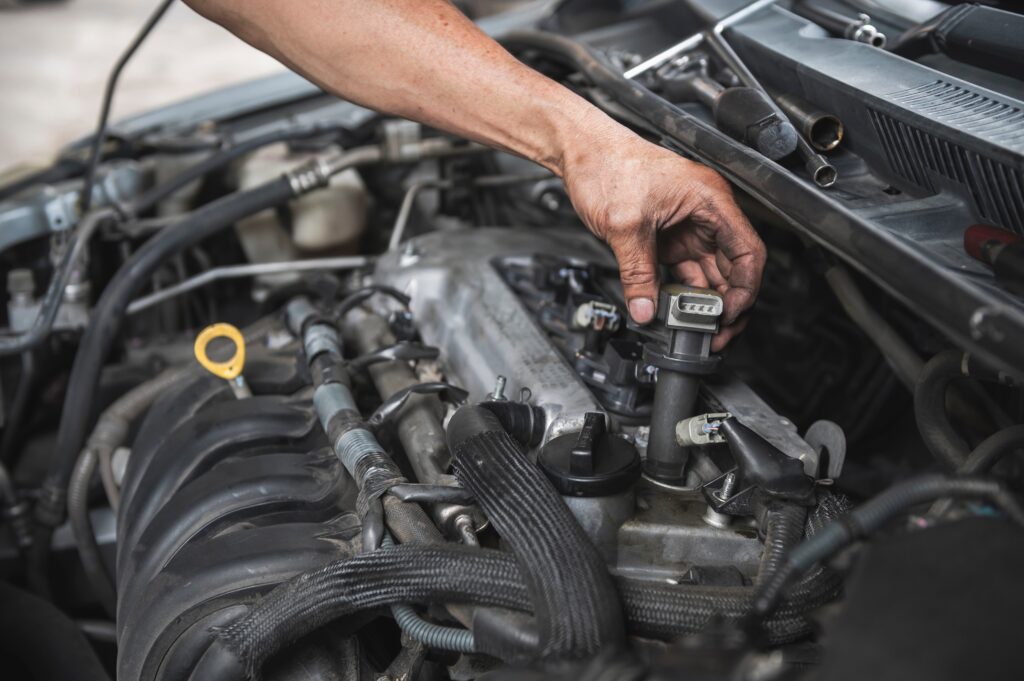
P0299 means the turbocharger is delivering less boost than the module requested, and the missing pressure usually comes from a leak rather than the turbo.
Key Takeaways
- The P0299 code means the turbocharger or supercharger is producing less boost pressure than the module requested from it.
- The most common symptoms are a check engine light, weak acceleration, limp mode, whistling or hissing noises, and worse fuel economy.
- A boost leak from a cracked or loose charge pipe is the single most common cause, and pressure testing the charge system resolves most cases without touching the turbo.
What Does the P0299 Code Mean?
The P0299 code reads “Turbocharger/Supercharger ‘A’ Underboost Condition,” and it means the powertrain control module measured boost pressure below the level it commanded for longer than its threshold allows.
The module calculates a target from throttle position, engine load, and RPM, then compares it against the boost sensor’s reading, a self-check that federal OBD rules require it to run continuously.
The “A” designation covers the single turbo on most engines or the primary unit where two are fitted, and the fault can sit anywhere between the air filter and the exhaust. The table below condenses the code for quick diagnosis.
| P0299 at a glance | Details |
| Definition | Turbocharger or supercharger “A” underboost, meaning measured boost stays below the commanded target. |
| Most common cause | A boost leak between the turbo outlet and the intake manifold. |
| First check | Commanded versus actual boost on a scan tool during a road test. |
| Quick fix | Pressure test the charge system and repair the leak it finds. |
| Can you drive? | Briefly and gently, with limp mode likely, and not at all if anything grinds. |
Common Causes of P0299
The causes spread across the entire air path, but boost escaping through a leak explains more cases than every other cause combined. The table below runs them in the order they turn up in practice.
| Cause | How it sets the code |
| Boost leaks and damaged hoses | Cracked charge pipes, split couplers, and leaking intercooler end tanks, often quiet at idle and loud under load. |
| Wastegate and boost control faults | A stuck or bleeding actuator, a failed solenoid, or a cracked vacuum line never lets pressure build. |
| Variable geometry turbocharger (VGT) problems | Soot packs the vanes on diesels until they stick, and failed actuators set the same code. |
| Clogged intake or restricted exhaust | A starved compressor or a choked turbine, including a loaded diesel particulate filter. |
| Sensors, wiring, and oil pressure | A low-reading boost sensor invents the fault, and some VGT designs lose vane control with low oil pressure. |
P0299 Boost Pressure: Actual vs Requested
Requested boost is the target the module calculates moment by moment from throttle, load, and RPM, while actual boost is what the pressure sensor measured the charge system delivering.
On a healthy system the actual value chases the request closely, so the gap between the two numbers is the whole diagnosis.
Actual boost falls short in one of three broad ways. The pressure escaped through a leak, the turbo never generated it, or the sensor misreported it, and leaks dominate in practice while sensor faults are the cheapest to rule out.
Watching both values during a road test localizes the fault before any tools come out. Note when the gap opens and whether it tracks load, heat, or time, then match the shape against the table below.
| Boost pressure pattern | What it points toward |
| Actual tracks the request, with brief dips under hard load | A marginal leak or a weakening wastegate actuator. |
| Actual stays near atmospheric and never builds | A major leak, a disconnected charge pipe, or a failed turbo. |
| Actual builds slowly and reaches the target late | Restricted intake or exhaust, or sticking VGT vanes. |
| Actual reads normal when cold, then falls off warm | A leak that opens as components heat and expand. |
| Requested value itself jumps or reads implausibly | A sensor or wiring fault feeding the module bad data. |
How to Diagnose P0299
The diagnosis sorts the missing boost into one of those three buckets with the least labor. A scan tool and a hand vacuum pump cover most of it, and the search stops at the first confirmed cause.
Scan for P0299 & related trouble codes
Pull every stored and pending code first, because the neighbors narrow the search fast. A lean code such as P0171 strengthens the case for a boost leak, since escaping air leans the mixture, and misfires like P0300 usually mean the lean condition has reached combustion.
Compare commanded & actual boost pressure
Log requested and actual boost on a drive and match the gap against the patterns above. Check the sensor against barometric pressure with the key on and engine off, where a disagreement volunteers the sensor as the fault.
Inspect turbo hoses, intercooler & intake system
Inspect every charge pipe, coupler, and clamp from the turbo outlet to the throttle body, looking for cracks, oil residue, and connections that move by hand. Pressurize the system with a boost leak tester, since a leak that hides from the eye announces itself under pressure.
Test the wastegate, boost control solenoid & actuator
Apply vacuum or pressure to the wastegate actuator with a hand pump and watch the linkage move smoothly through its range and hold. Command the boost control solenoid with the scan tool, because a binding linkage, a bleeding actuator, or a dead solenoid explains the code without touching the turbo.
Check the turbocharger, sensors & exhaust system
Inspect the turbo last, checking the compressor wheel for damage, the shaft for play, and the vanes for free movement on VGT units. Rule out exhaust restriction with a backpressure test when a converter or particulate filter is suspect, since a free-spinning turbo with intact blades rarely deserves the blame.
How to Fix the P0299 Code
Most people searching “p0299 code how to fix” are bracing for a turbocharger bill, and the turbo sits last on the list by design. Match each repair to its confirmed cause, and verify actual boost tracks the request on a road test afterward.
| Confirmed cause | Repair |
| Boost leak | Replace cracked pipes, split couplers, and tired clamps, then pressure test again for a second leak. |
| Wastegate or boost control fault | Replace a torn actuator or failed solenoid, and renew cracked vacuum lines as a set. |
| Sticking VGT vanes | Clean the vanes to the factory procedure, with actuator replacement for the ones that stay slow. |
| Intake or exhaust restriction | Replace the filter or ducting, and address a clogged converter or force a particulate filter regeneration. |
| Faulty sensor or wiring | Fit the correct part number, repair the wiring, and confirm the reading against barometric pressure. |
| Damaged turbocharger | Replace it along with the oil, the filter, and any contaminated charge piping, and prime the oil feed first. |
A replacement turbo inherits whatever killed the original, so the oil supply and ingested debris questions get answered before the new unit goes in. Skipping the cleanup steps is how a second turbo fails inside a month.
Is It Safe to Drive With a P0299 Code?
The short answer to “is it safe to drive with a P0299 code” is yes for a short, gentle trip and no as a way of life. Most vehicles cut power or enter limp mode to protect the engine, and a P0299 engine code that arrives with grinding or metallic noises means parking the vehicle before the turbo sheds debris into the engine.
The risk grows with the cause, since a boost leak leans the mixture and raises exhaust temperatures, and sustained lean running is how an ignored underboost eventually adds a catalyst code like P0420 to the ticket. Avoid towing, heavy loads, and hard acceleration until the cause is found.
P0299 Code Repair Cost
The repair cost for P0299 covers one of the widest ranges in the OBD-II catalog, because the same code can mean a hose clamp on one vehicle and a turbocharger on another.
For anyone weighing “p0299 code how to fix” costs before booking the work, the table below lists typical parts pricing for the common repairs, with labor varying by engine layout and turbo access.
| Repair | Typical parts cost |
| Charge pipe, coupler, or clamps | 20 to 150 dollars. |
| Vacuum lines to the actuator | 10 to 40 dollars. |
| Wastegate actuator | 50 to 250 dollars. |
| Boost control solenoid | 30 to 100 dollars. |
| Boost, MAP, or MAF sensor | 30 to 150 dollars. |
| Turbocharger replacement | 500 to 2,500 dollars or more in parts, plus significant labor. |
Note: Prices are aggregated estimates drawn from multiple retail parts and repair pricing sources, and actual costs vary by brand, OEM versus aftermarket parts choice, and region.
Expect an hour or more of diagnostic time, since pressure testing and road testing both belong in a proper workup. On newer vehicles, check the EPA emissions warranty before paying out of pocket, since emission-related parts carry a 2-year or 24,000-mile defect coverage.
Manufacturer-Specific Causes & Solutions for P0299
Underboost is universal, but each manufacturer loses its pressure in favorite places. The five manufacturers below account for most of the search traffic behind this code, and their patterns are distinct enough to change where the diagnosis starts.
P0299 on Ford
A P0299 Ford case splits sharply between diesel and gasoline. The 6.0-liter Powerstroke made this code famous for sticking VGT vanes, EGR trouble, and the low oil pressure that its vane control depends on, so oil condition and vane movement come first on those trucks.
EcoBoost gasoline engines lose boost through charge pipe leaks, wastegate actuators, and intercooler connections instead. Reading the boost data before touching anything keeps a P0299 Ford diagnosis from starting on the wrong half of that split.
P0299 on Chevrolet
A P0299 Chevy complaint focuses on the 1.4-liter turbo in the Cruze, Sonic, Trax, and Encore, where the failure that matters isn’t a hose. The PCV diaphragm built into the valve cover ruptures on these engines, and a one-way check valve in the intake manifold fails alongside it, upsetting crankcase pressure until boost control falls apart.
Check the valve cover and that check valve before condemning anything else, then pressure test the charge pipes, which crack at the fittings on higher-mileage cars.
Most P0299 Chevy repairs on this engine family end at the valve cover, a pipe, or the turbo’s integrated wastegate.
P0299 on Hyundai
A P0299 Hyundai case on the 1.6-liter turbo engines in the Elantra, Kona, Tucson, and their Kia siblings usually starts with the charge hoses and their spring clamps, which loosen and leak at the intercooler connections.
Wastegate actuators on these engines weaken with age, and the boost control solenoid and its small vacuum lines account for much of the rest.
Software matters here too, since Hyundai has revised boost control calibrations on several engines, so a bulletin check belongs early in the process. A P0299 diagnosis on a Hyundai rarely ends at the turbocharger itself.
P0299 on Volkswagen
Volkswagen and Audi define this fault as boost pressure control range not reached, and their 2.0-liter turbos have two signature causes. The diverter valve that recirculates boost when the throttle closes fails with a torn diaphragm on earlier designs, bleeding pressure constantly, and the N75 boost control valve that commands the wastegate sticks or fails electrically.
Both parts are inexpensive relative to the turbos they protect, and both are quick to test with a hand vacuum pump and a scan tool. Charge pipe and intercooler leaks fill out the usual list on higher mileage cars.
P0299 on Dodge
Dodge and Ram cases lean heavily toward the diesels, where the 6.7-liter Cummins sets this code as soot packs the VGT mechanism until the vanes stick. Forced regenerations, vane-cleaning procedures, and turbo actuator replacement resolve most of them, and trucks that idle long hours or run short trips build soot fastest.
Gasoline models point to the more conventional charge pipe and wastegate causes. A stuck-vane Cummins often shows the slow-building boost pattern from the table above, which separates it from a simple leak in minutes.
How to Prevent P0299 From Returning
Prevention centers on the connections rather than the turbo. Check charge pipe clamps and couplers at every oil change, replace cracking rubber before it fails on the road, keep the air filter fresh, and treat any new whistle under acceleration as a leak announcing itself.
Diesel owners carry two extra duties on top of those habits. Work the engine under load regularly so the vanes move through their range and the filter regenerates, and keep oil changes on schedule where vane actuators run on oil pressure.
A repeat P0299 engine code usually traces to a clamp nobody rechecked, which makes the five-minute inspection the cheapest insurance available.
Resolve P0299 Faster With Identifix Direct-Hit
An underboost code names the symptom and nothing else, and the productive question is: where does this year, make, and model usually lose pressure?
The same P0299 means a ruptured valve cover diaphragm on one car, a soot-packed VGT on the truck beside it, and a torn diverter valve on the next, and testing in the wrong order costs hours of labor on components that were never at fault.
Identifix Direct-Hit puts confirmed fixes, OE service manuals, and interactive wiring diagrams behind a search filtered by year, make, and model, so technicians can see which repair actually cleared this code on this vehicle. Contact us to see how Direct-Hit handles a P0299 diagnosis on the vehicles your shop sees most.
Frequently Asked Questions
Can a P0299 code appear after replacing a turbocharger?
Yes, and it happens often enough to have a standard explanation list. The original cause was a leak or control fault the turbo replacement never addressed, a charge pipe or gasket was left loose during the install, the wastegate or VGT actuator on the new unit was never calibrated as required, or protective packaging and debris stayed in a pipe.
Can cold weather cause a P0299 code?
Yes, cold weather can cause this code in several ways. Cold stiffens actuator diaphragms and vacuum lines, shrinks rubber couplers until marginal connections leak, and on some engines lets condensation freeze inside the intercooler and restrict airflow until the charge warms.
An engine that also runs colder than it should compounds matters, and a thermostat fault that sets a P0128 beside the boost code deserves repair at the same visit. A P0299 that appears only on frigid mornings and clears by afternoon points at temperature-dependent causes rather than a failed part.
Can an aftermarket air intake trigger P0299?
Yes, when the intake changes what the sensors read or restricts what the compressor receives. A different tube diameter and filter location shift the MAF reading the module uses for its boost calculation, an over-oiled aftermarket filter contaminates the sensor outright, and some designs leak at their joints under boost.
Restoring the factory intake, or correcting the oiling and connections, settles the question quickly when the code appeared soon after the modification.
Can towing or heavy loads make P0299 appear?
Yes, because a heavy load is when the module requests maximum boost and a marginal system finally misses the target. A small leak or weakening actuator that survives commuting can fall short when a trailer raises demand, and sustained load can also heat components until borderline connections open up.
A P0299 that only appears under towing is still a real fault, just one that lighter driving has been hiding.
Can clearing P0299 without repairing it cause it to return?
Yes, the code returns as soon as the module sees the same pressure gap again, which usually takes one firm acceleration. Clearing also resets the readiness monitors, and under federal OBD regulations, the light only stays off after three consecutive drive cycles without the fault, so erasing it before an inspection helps nothing.
The productive use of a scan tool here is watching boost data to find the leak, not deleting the evidence.

Identifix is the leading provider of automotive repair shop solutions and sevices designed to improve shop profitability and repair outcomes.