Enterprise repair networks are entering a new era of complexity. More locations, more data, more customers, and more systems that do not always communicate well. Growth is good but scaling that growth sustainably is the real challenge. The networks poised to win in 2026 are the ones that choose to scale smarter, not harder.
Connected platforms are transforming multi‑location operations by replacing scattered, inconsistent processes with a single, unified system. When every shop runs on the same workflow and shares the same data foundation, enterprise networks unlock efficiency that disconnected tools simply cannot match.
Why Connected Platforms Matter for Enterprise Repair Networks
Managing an enterprise repair network means coordinating thousands of moving parts across many locations. Without a connected platform, intake, estimating, inspections, approvals, parts management, technician routing, communication, billing, and reporting often live in separate tools. That fragmentation increases cost, training time, cycle time, and frustration.
A connected platform cuts out the friction and lets your network scale with confidence. With shared workflows and centralized data, you can:
1. Standardize operations across every location
When every shop follows the same intake, digital inspection, estimating, and repair workflows, you build predictable outcomes at scale. Enterprise repair networks who implement unified workflows, guided inspections, and consistent permission see smoother onboarding, easier cross‑location staffing, and a more reliable customer experience.
2. Eliminate redundant work
Disconnected systems create double entry, manual data transfer, and unnecessary administrative tasks. When your locations operate on a single cloud platform, those inefficiencies disappear. The benefits go beyond convenience. Bain’s research shows that digital collaboration and AI driven processes are projected to deliver efficiency gains of more than 10 percent in the near term and as much as 30 percent by 2030. These gains only become possible when data is centralized and no longer trapped in siloed systems.
3. Unlock real ROI with better visibility
You cannot improve what you cannot see. Enterprise leaders need real time dashboards that roll up bay utilization, cycle time, technician productivity, rework rates, and parts performance across every shop.
Advanced analytics create a clearer picture of where margins are made, where operations stall, and where investment will have the greatest impact. As repair complexity increases across both mechanical and collision sectors, networks that rely on centralized visibility will be able to allocate resources with greater precision and scale more intelligently.
4. Improve your customer experience
Customers reward transparency, speed, and accuracy. J.D. Power’s 2025 Customer Service Index Study found that 12 percent of repairs are not completed correctly on the first visit. The study also shows that communication gaps and long appointment waits significantly reduce satisfaction and loyalty. A connected platform solves this by coordinating appointments, parts availability, technician scheduling, approvals, and real time status updates in one place.
Why 2026 Is the Year to Scale Smarter
Repair complexity is rising. Customer expectations are growing. The number of vehicle technologies requiring calibration, digital documentation, and coordinated workflows is increasing. What is not changing is capacity or tolerance for inefficiency.
Enterprise repair networks need tools that help them move fast, stay aligned, and make smart decisions across all locations. This is the year to streamline operations, eliminate guesswork, and expand with confidence.
ShopCentral: Built for Enterprise Scale
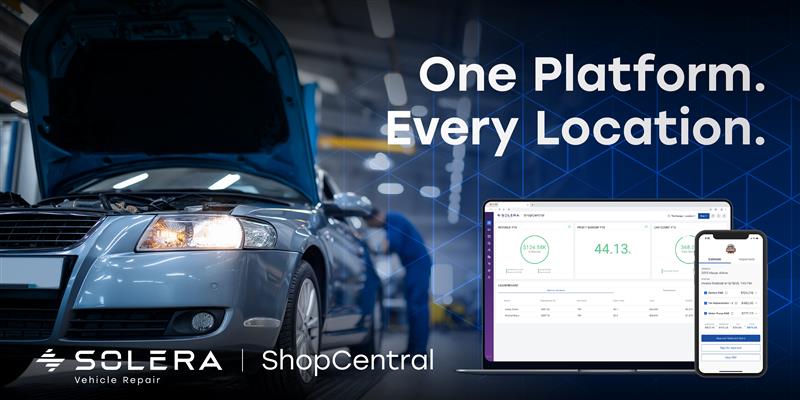
This is the year for ShopCentral, which gives enterprise operators one platform to unify workflows, data, and reporting across every shop. With ShopCentral, you get:
- A single source of truth for your entire network
- Standardized processes that reduce variability
- Reduced admin and fewer duplicated tasks
- Enterprise‑grade visibility and reporting
- Stronger customer experiences powered by coordinated workflows
- Higher ROI through efficiency and consistency
Your enterprise has the potential to grow faster, operate more consistently, and perform at a higher level than ever before. ShopCentral helps unlock that potential by connecting your entire network on one platform built for enterprise level integration.
See how ShopCentral can transform your enterprise. Request a demo today!